The building is the computer.
An AI data centre is a thermal machine with racks in it. Ours is cooled from a sewer-source free-cooling loop, powered in island mode from its own gas plant, gives its waste heat back to the site - and is run, watched and continuously optimised by MOTHER AI itself. This page is the engineering underneath everything else on this site.
Horizon: cooling that costs almost nothing.
The Horizon design takes heat out of the hall with a closed glycol loop, hands it across a titanium plate heat exchanger to an 11 °C sewer-source loop, and lets it go. At the design operating point free cooling alone holds the 30 °C supply - the chillers never start.
Sewer-source free cooling
An 11 °C sewer-source secondary loop is the first and, at the design point, the only stage of cooling. Heat crosses a titanium WRAS Cat-5 plate heat exchanger into the well; the flow passes through and leaves at 20.8 °C. No water is abstracted and none is consumed.
Direct liquid cooling in the hall
A closed 25% glycol primary loop runs cold plates at 30 °C supply and 42 °C return - a 12 °C ΔT at 175 L/s primary against 200 L/s secondary. 8.2 MW of the hall's load is taken by liquid, leaving under a megawatt to air.
High return temperature, on purpose
Running a 42 °C return is what makes free cooling work all year and makes the waste heat worth something. Cold-plate setpoint, flow and PHE effectiveness are tuned together in the digital twin before anything is changed on the plant.
A three-tier cascade, in that order.
Heat leaving the hall at 42 °C is a resource, not a problem. It is offered to free cooling first, to the gas-plant absorption circuit second, and only then - if it must be - to mechanical cooling. The order is the design.
Free cooling · sewer source
Holds the 30 °C supply on its own at the design point. Zero mechanical cooling called.
Heat reuse · gas-plant absorption
Return heat drives an absorption circuit into the gas plant and building HVAC. 6.1 MW available.
Chiller trim
Mechanical cooling exists only as a trim stage behind the other two - standby, not baseline.
Because tiers two and three sit at 0.00 MW at the design point, the site’s PUE lands at 1.110 - and the 6.1 MW of absorption capacity stays in reserve for the coldest and the hottest days of the year, when the sewer loop alone is not enough.
Generated here. Not borrowed.
The site runs island-mode gas-CHP with the grid as an alternate, not a dependency - which is what makes a 38 MW site possible on a connection queue that would not otherwise allow it, and what makes 70 MW from 2027 a build programme rather than a wait.
Island-mode gas-CHP
Generation on site in island mode, 3+1 N+1, with grid as an alternate rather than a dependency - and a fuel cascade behind it: gas, grid, diesel, then tidal and solar as they come on.
Protected power
Five 1,200 kW UPS systems in N+1 parallel give 6 MW installed, backed by 35 lithium battery cabinets at five minutes' autonomy, a maintenance bypass system and a client handoff panel.
Buffered and resilient
A 4 MWh battery energy storage buffer rides through transfers and smooths the step loads that large training jobs put on the plant, so a checkpoint never depends on the grid behaving.
- site
- 38 MW · 70 MW from 2027
- generation
- island gas-CHP · 3+1 N+1
- cascade
- gas → grid → diesel → tidal/solar
- UPS
- 5 × 1,200 kW · N+1 · 6 MW
- autonomy
- 35 Li cabinets · 5 min
- BESS
- 4 MWh buffer
- thermal
- scaling to 100 MWth
- cooling
- DLC + Horizon free cooling
- PUE
- 1.110 at design point
- rack density
- up to 58 kW
The same brain that runs the models runs the building.
MOTHER is not a tenant in this data centre - it is the mainframe of it. DeepVision watches the halls, the digital twin models the plant, and MOTHER CORE reasons over load, weather, tariff and maintenance to propose the next setpoint. Engineers promote; nothing auto-applies.
MOTHER Vision
The facility's eyes: DeepVision watches every hall, plant room and perimeter camera on-premises, flagging anomalies in the process, not just in the picture.
Live digital twin
DC1-B and DC3 are twinned end to end. Every setpoint - flow, cold plate, PHE effectiveness, fouling, heat reuse - is modelled before it is moved on the real plant.
MOTHER CORE reasoning
The same deterministic core that answers a defence query reasons about the building: load, weather, gas price, maintenance windows and what to do about them.
Control plane
Identity, GPU inventory, deployments, node access and token budgets run through one audited control plane. No hyperscaler sits anywhere in the path.
Human-in-the-loop
MOTHER proposes; engineers promote. Nothing auto-applies to live plant or to live models - every change is gated, logged and reversible.
Continuous optimisation
The twin runs ahead of the plant, searching the operating envelope for the lowest-energy point that still holds supply temperature, and files the difference as a proposal.
Our 60-DOF humanoid build.
Everything above this line exists so that this can exist: sovereign power, sovereign cooling and sovereign compute, training a world model that ends up inside a body built in Britain.
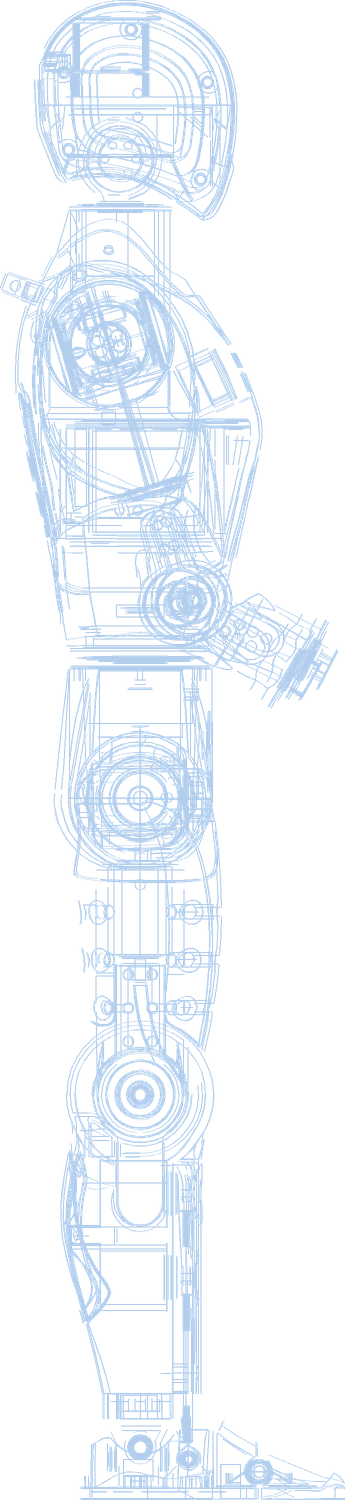
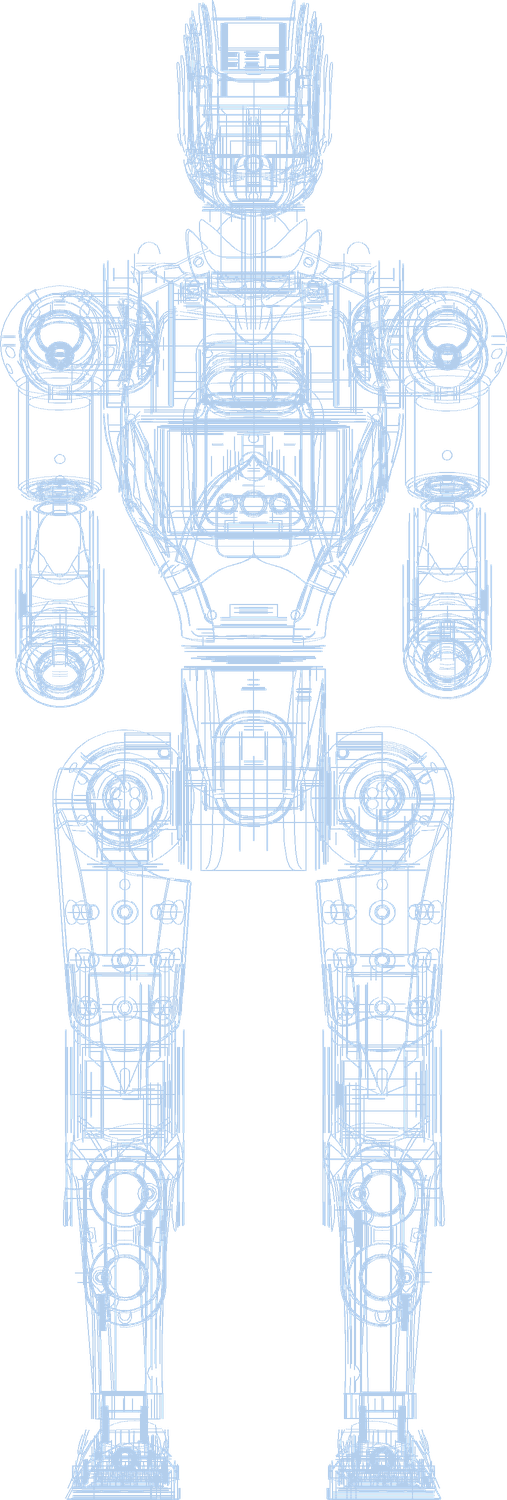
60 degrees of freedom
A 60-DOF humanoid build running a 1 kHz L0 motor loop, with the layered cognitive stack above it from motor control to the L4 Guardian action filter.
Graphene-infused build
An upgraded platform on the ASIMOV V.1 open-source robotics backbone, redesigned with over 5,000 modifications and graphene-infused materials throughout.
Behaviour-cloned from real teleop
The motor policy is cloned from 150,000 real teleoperation steps - recorded, not simulated - then hardened in closed-loop physics simulation before it touches hardware.
Manchester assembly
The UK humanoid lab and assembly line in Manchester comes online Q1 2027, targeting 1,000 units a year on a sovereign supply chain at a PUE of 1.18.
Come and see the plant.
Site visits, thermal design detail and the full due-diligence pack are available to prospective clients and partners.
Arrange a site visitFigures are the Horizon digital-twin design operating point for DC1-B and the DC3 protected-power scope of supply. Forward-looking: site capacity, plant scaling and the Manchester factory date are indicative plans, not commitments, and may change. NVIDIA, HGX, Blackwell, GB10, AMD and Instinct are trademarks of their respective owners.